The EIB’s Investment Strategy
The EIB’s investment strategy is focused on supporting the European Union’s (EU) strategic priorities, including climate action, sustainable growth, and social inclusion. The bank’s investments are guided by the EU’s multiannual financial framework, which sets out the EU’s priorities for the next seven years.
Key Areas of Focus
The EIB’s Investment in the Security and Defence Industry
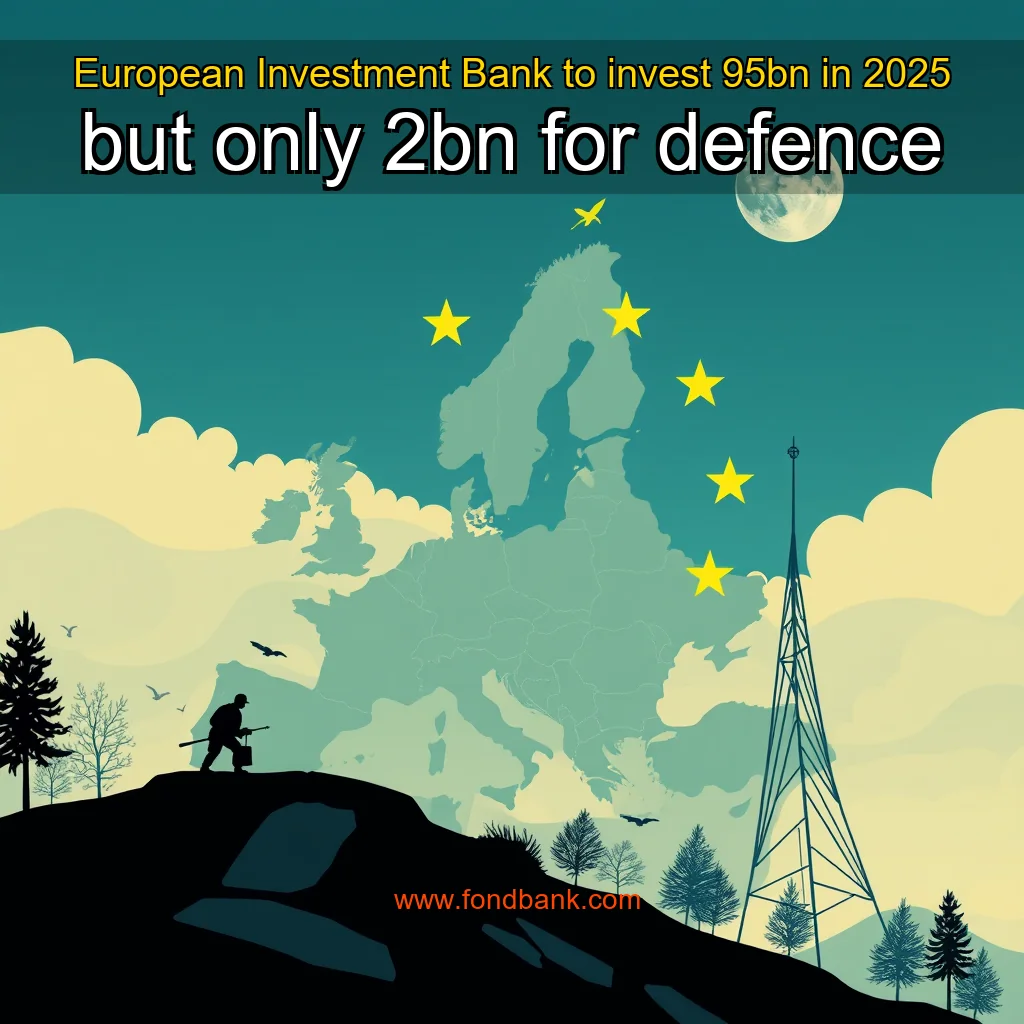
The EIB is allocating just €2 billion to Europe’s security and defence industry in 2025. This represents a relatively small portion of the bank’s overall investment strategy.
Challenges and Opportunities
The Future of the EIB’s Investment Strategy
The EIB’s investment strategy is evolving to address the changing needs of the European Union and its citizens.
The European Investment Bank’s (EIB) Growing Role in Security and Defence
The European Investment Bank (EIB) has been increasingly involved in supporting security and defence projects across the European Union. This growing role is a response to the changing security landscape and the need for a coordinated approach to address emerging challenges.
A Shift in the EIB’s Mandate
The EIB’s involvement in security and defence projects marks a significant shift in its mandate.
The EIB is also a major player in the European Union’s Green Bond initiative.
The European Investment Bank (EIB) – A Global Leader in Sustainable Finance
A Brief History of the EIB
The European Investment Bank (EIB) has a rich history dating back to 1958, when it was established as a result of the Treaty of Rome. The EIB was created to provide financing for the European Economic Community (EEC), which later evolved into the European Union (EU).
The EIB has also been working closely with the European Commission to develop a comprehensive strategy for the EU’s energy transition.
The EU’s Energy Transition: A Call to Action
The European Union is facing a critical juncture in its energy transition journey. As the world’s largest economy, the EU is under pressure to reduce its carbon footprint and transition to a low-carbon economy. The EU’s energy transition is a complex and multifaceted process that requires significant investment and cooperation among member states, the European Commission, and private sector players.
The Scale of the Challenge
The EU’s energy transition is a massive undertaking that requires substantial investment. According to the European Commission, the EU needs to invest €700–800 billion annually over the next decade to meet its climate and energy goals.
The European Investment Bank (EIB) has announced its plans to increase its support for innovators and start-ups, as well as for farmers and food resilience, in the coming year.
Scaling Up Support for Innovators and Start-ups
The EIB aims to provide more funding and resources to support the growth of innovative businesses and start-ups across Europe.