Introduction
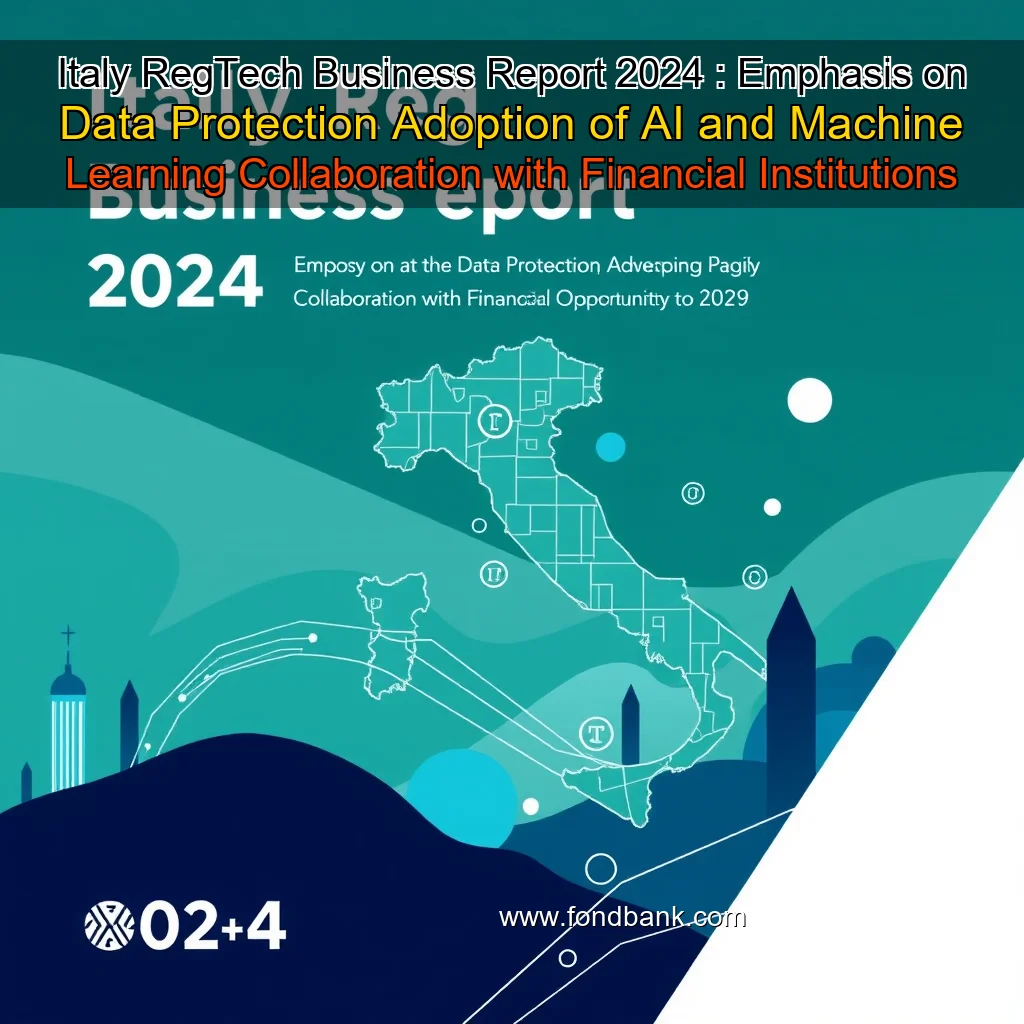
The Italian RegTech market is rapidly expanding, driven by the increasing demand for regulatory compliance and risk management solutions. This report provides an in-depth analysis of the Italian RegTech market, including key performance indicators (KPIs) on market size, industry, technology, product type, deployment, product offering, and market share.
Here are some key trends and insights that highlight the sector’s growth and potential.
Key Trends in the Italian RegTech Sector
The Italian RegTech sector is experiencing significant growth, driven by the increasing adoption of advanced technologies such as artificial intelligence (AI), blockchain, and cloud computing. These technologies are being leveraged to improve regulatory processes, enhance data analysis, and increase efficiency. Key areas of focus for the Italian RegTech sector include:
- Regulatory compliance: Leveraging AI and machine learning to automate routine tasks and improve compliance with complex regulations. Data analytics: Utilizing advanced data analytics tools to gain insights into regulatory trends and improve decision-making.
RegTech solutions help Italian businesses navigate complex regulatory requirements
## The Rise of RegTech in Italy:The Rise of RegTech in Italy
Regulatory technology, or RegTech, has been gaining traction in Italy in recent years. The country’s growing need to comply with data privacy laws has led to an increase in the adoption of RegTech solutions.
Fintastico is the result of a collaboration between SIA and the Italian RegTech company, RegTech Italia.
The Birth of Fintastico
Fintastico is the brainchild of SIA and RegTech Italia, two Italian companies with a shared vision of revolutionizing the financial services industry.
The Benefits of Real-Time Analytics for Financial Institutions
In today’s fast-paced financial landscape, institutions must navigate a complex web of regulations to ensure compliance with Anti-Money Laundering (AML) and Know Your Customer (KYC) requirements. One key solution to this challenge is the use of real-time analytics and reporting tools provided by SIA.
Streamlining Compliance with Real-Time Analytics
SIA’s platform offers a range of features that enable financial institutions to streamline their compliance processes. These include:
- Real-time monitoring of customer activity: SIA’s platform provides real-time analytics and reporting tools that enable financial institutions to monitor customer activity and detect potential suspicious transactions. Automated risk assessment: The platform’s automated risk assessment tools help financial institutions identify and mitigate potential risks associated with customer transactions. Compliance reporting: SIA’s platform provides comprehensive compliance reporting tools that enable financial institutions to meet regulatory requirements and demonstrate compliance. ### Reducing Time and Resources Required for Regulatory Adherence*
- Improve operational efficiency: SIA’s platform helps financial institutions streamline their compliance processes, reducing the time and resources required for regulatory adherence. Enhance customer experience: By providing real-time analytics and reporting tools, SIA’s platform enables financial institutions to improve customer experience and build trust with their customers.
The bank leveraged the innovative solutions provided by the startups to improve its regulatory compliance and risk management capabilities.
The Rise of RegTech in Italy
Regulatory technology, or RegTech, has been gaining significant traction in Italy in recent years. The country’s financial sector is at the forefront of this trend, with many banks and financial institutions embracing innovative solutions to improve their regulatory compliance and risk management capabilities.
Key Benefits of RegTech
- Improved regulatory compliance: RegTech solutions can help financial institutions stay ahead of regulatory requirements, reducing the risk of non-compliance and associated fines. Enhanced risk management: RegTech solutions can provide real-time monitoring and analysis of risk, enabling financial institutions to make more informed decisions and mitigate potential threats.
The Treaty of Paris, signed in 1783, formally ended the war and recognized the United States as a sovereign nation, with its own government and international relations.
The Road to Independence
The American Revolutionary War was the culmination of years of growing tensions between the colonies and Great Britain. The colonies had been under British rule since the early 17th century, and over time, they developed their own distinct culture, economy, and system of government. However, the British government imposed various taxes and regulations on the colonies without their consent, leading to widespread discontent among the colonists. Key events that contributed to the outbreak of the war include: + The Boston Massacre (1770) + The Boston Tea Party (1773) + The Intolerable Acts (1774) + The First Continental Congress (1774)
- These events highlighted the growing divide between the colonies and Great Britain, ultimately leading to the outbreak of war in ## The War for Independence
The War for Independence
The American Revolutionary War was a long and bloody conflict that lasted from 1775 to 1783. The war was fought on multiple fronts, with battles taking place in the North, South, and West.
.
Introduction
The banking and financial services industry is a complex and dynamic sector that requires the implementation of various technologies to ensure efficiency, security, and compliance. In this article, we will explore the different types of products and solutions that are used in the industry, with a focus on identity verification solutions, compliance management platforms, automated reporting tools, and fraud detection systems.
Identity Verification Solutions
Identity verification solutions are a crucial aspect of the banking and financial services industry. These solutions help to ensure that customers are who they claim to be, and that transactions are legitimate. There are several types of identity verification solutions available, including:
- Biometric authentication: This involves the use of unique physical or behavioral characteristics, such as fingerprints, facial recognition, or voice recognition, to verify a customer’s identity. Knowledge-based authentication: This involves the use of a customer’s knowledge, such as a password or PIN, to verify their identity. Document-based authentication: This involves the use of a customer’s identification documents, such as a driver’s license or passport, to verify their identity. Examples of identity verification solutions include:**
- Google Authenticator: A two-factor authentication app that uses a combination of a password and a time-based one-time password (TOTP) to verify a customer’s identity. * Microsoft Azure Active Directory: A cloud-based identity and access management solution that uses biometric authentication and other methods to verify a customer’s identity.
Introduction
Fraud detection systems are a crucial component of any organization’s security infrastructure. These systems are designed to identify and prevent fraudulent activities, such as identity theft, credit card scams, and other types of financial crimes. In this article, we will explore the various types of fraud detection systems, data protection technologies, and other products that are used to prevent and detect fraud.
Types of Fraud Detection Systems
Fraud detection systems can be broadly categorized into two types: rule-based systems and machine learning-based systems.
Rule-Based Systems
Rule-based systems use predefined rules to identify potential fraudulent activity.
Streamlining Business Processes with Automation Anywhere’s Robust Range of Solutions.
Other Products Artificial Intelligence and Machine Learning Technologies and type of Products Predictive Analytics and Business Intelligence.
The Diverse Range of Products and Solutions Offered by Automation Anywhere
Automation Anywhere is a leading provider of robotic process automation (RPA) technology, offering a wide range of products and solutions to help businesses automate and streamline their processes. In this article, we will delve into the diverse range of products and solutions offered by Automation Anywhere, including robotic process automation, compliance management, workflow automation, data encryption and security, protection technologies, and artificial intelligence and machine learning.
Robotic Process Automation (RPA) Technology
Automation Anywhere’s RPA technology is designed to automate repetitive and mundane tasks, freeing up employees to focus on more strategic and creative work. With its advanced RPA platform, businesses can automate tasks such as data entry, document processing, and customer service, among others. The platform is highly customizable, allowing businesses to tailor it to their specific needs and workflows. Key features of Automation Anywhere’s RPA technology include: + Advanced robotic process automation capabilities + Integration with existing systems and applications + Customizable workflows and processes + Real-time monitoring and reporting
Compliance Management Platforms
Automation Anywhere’s compliance management platforms are designed to help businesses manage and mitigate compliance risks. These platforms provide a centralized repository for compliance data, allowing businesses to track and monitor compliance across multiple systems and applications. The platforms also offer advanced analytics and reporting capabilities, enabling businesses to identify and address compliance gaps.
Introduction
The service model is a crucial aspect of the IT industry, and it plays a significant role in determining the success of a company. In this article, we will delve into the three primary service models: on-premise, hybrid, and service solution. We will explore the characteristics, benefits, and challenges associated with each model, as well as the factors that influence their adoption.
On-Premise Model
The on-premise model is a traditional approach where the service provider delivers services from their own premises. This model is often associated with large enterprises and organizations that require high levels of security, control, and customization. Key characteristics: + Services are delivered from the provider’s premises + High levels of security and control + Customization options available + Often associated with large enterprises
- Benefits:
+ Better control over data and security + Customization options to meet specific business needs + Ability to integrate with existing infrastructure
- Challenges:
+ High upfront costs + Complexity in managing and maintaining infrastructure + Limited scalability
Hybrid Model
The hybrid model combines elements of the on-premise and service solution models.
The letter highlights the Company’s failure to comply with NYSE Regulation’s rules and guidelines, specifically with regards to the disclosure of material information.
The Warning Letter
The NYSE Regulation Warning Letter serves as a formal notification to the Company of its non-compliance with NYSE Regulation’s rules and guidelines.
The initiative, dubbed “Green Charge,” aims to promote sustainable energy practices and reduce carbon emissions.
The Vision Behind Green Charge
The Green Charge initiative is the brainchild of TESSAN, a company that has been at the forefront of leading charging solutions for electric vehicles. With a growing focus on sustainability, TESSAN recognized the need for a comprehensive approach to reduce carbon emissions and promote eco-friendly practices. Key aspects of the Green Charge initiative include:
- Planting 10,000 trees across the United States and beyond
- Partnering with local organizations to promote sustainable energy practices
- Providing educational resources and workshops to raise awareness about the importance of sustainability
The Impact of Green Charge
The Green Charge initiative has the potential to make a significant impact on the environment. By planting 10,000 trees, TESSAN aims to:
- Absorb carbon dioxide from the atmosphere, contributing to a reduction in greenhouse gas emissions
- Provide habitats for local wildlife, promoting biodiversity and ecosystem health
- Enhance air quality, improving the overall quality of life for communities
For example, a single tree can absorb up to 48 pounds of carbon dioxide per year. By planting 10,000 trees, TESSAN can make a substantial contribution to reducing carbon emissions.
The Role of TESSAN in Promoting Sustainability
TESSAN’s involvement in the Green Charge initiative is a testament to the company’s commitment to sustainability.
- Improved regulatory compliance: RegTech solutions can help financial institutions stay ahead of regulatory requirements, reducing the risk of non-compliance and associated fines. Enhanced risk management: RegTech solutions can provide real-time monitoring and analysis of risk, enabling financial institutions to make more informed decisions and mitigate potential threats.
Reducing Time and Resources Required for Regulatory Adherence
SIA’s solutions significantly reduce the time and resources required for regulatory adherence. By leveraging real-time analytics and reporting tools, financial institutions can: