FSB Examines The Relevance Of Climate Transition Plans For Financial Stability

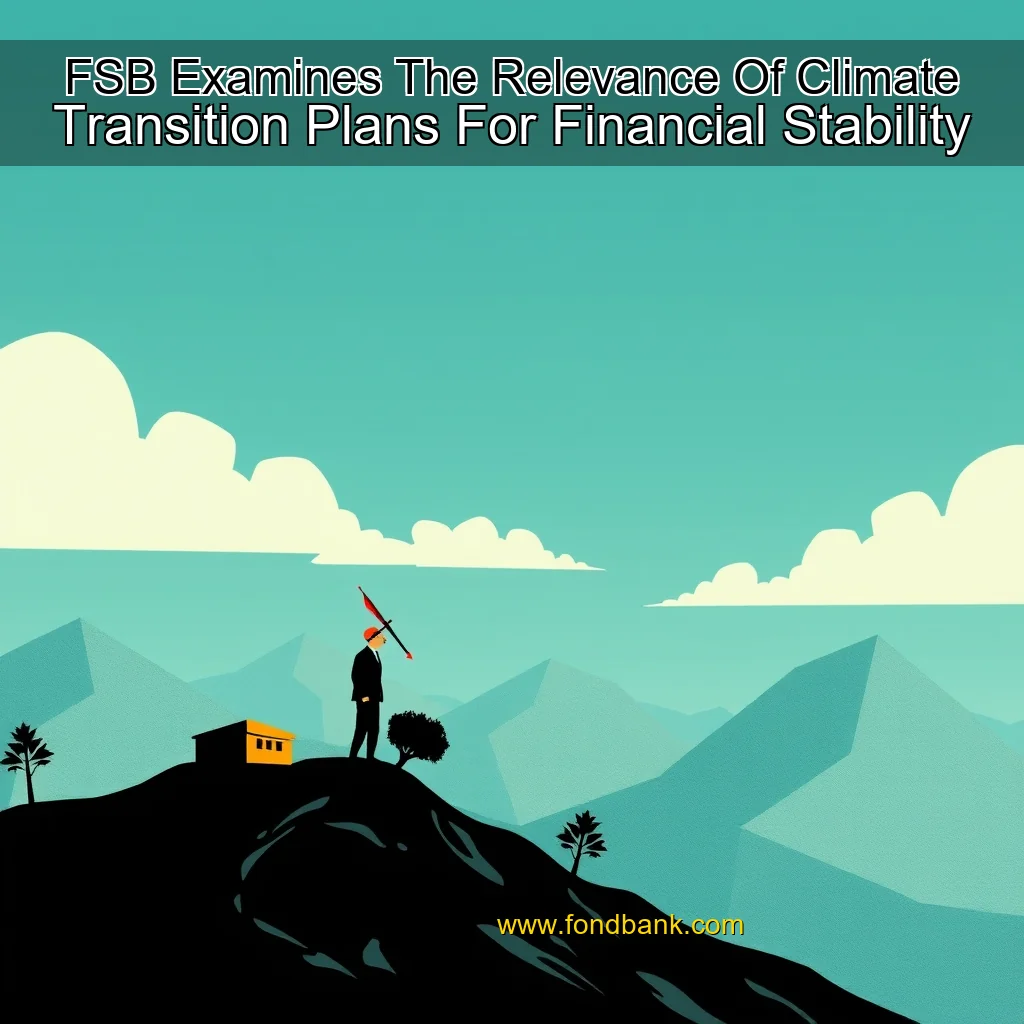
Artistic representation for FSB Examines The Relevance Of Climate Transition Plans For Financial Stability

FSB’s recommendations on transition plans are part of the FSB’s broader efforts to address the climate change risks and promote sustainable finance. The report also outlines the FSB’s approach to regulating the disclosure of climate-related information for companies and financial institutions.

However, they can be used as a tool to assess the stability of a financial institution or a financial system.

Transition Plans: A Tool for Financial Stability Assessments

Understanding Transition Plans

Transition plans are a business strategy tool used by organizations to outline their goals, objectives, and strategies for achieving them. They are typically used to guide the implementation of changes, such as restructuring, mergers, or acquisitions. While transition plans are not inherently designed for financial stability assessments, they can be repurposed as a tool to evaluate the stability of a financial institution or a financial system.

Key Components of Transition Plans

  • Objectives: Clearly defined goals that the organization aims to achieve through the transition plan.

    The FSB has been working on developing a framework for climate-related financial risks, which includes transition plans. The framework is designed to help financial authorities monitor and manage climate-related financial risks, and to provide guidance on how to address these risks.

    Transition Plans and Climate-Related Financial Risks

    Understanding the Importance of Transition Plans

    Transition plans are a crucial tool in addressing climate-related financial risks. These plans outline the steps that financial institutions will take to adapt to a low-carbon economy and reduce their exposure to climate-related financial risks.

    Fostering Global Financial Stability through Transparency, Accountability, and Cooperation.

    The FSB’s work is guided by the principles of transparency, accountability, and cooperation.

    The FSB’s Mission and Objectives

    The Financial Stability Board (FSB) is an international organization that aims to promote global financial stability. Its mission is to address the systemic risks that could lead to financial crises, and to foster cooperation among national authorities to achieve this goal.

    Key Objectives

  • To promote financial stability and prevent systemic crises
  • To enhance the effectiveness of national authorities in addressing financial stability risks
  • To foster cooperation and coordination among national authorities
  • To promote transparency and accountability in financial markets
  • Guiding Principles

  • Transparency: The FSB promotes transparency in financial markets to ensure that all stakeholders have access to accurate and timely information. Accountability: The FSB encourages national authorities to be accountable for their actions and decisions related to financial stability. Cooperation: The FSB fosters cooperation among national authorities to address common challenges and risks. ## The FSB’s Work*
  • The FSB’s Work

    The FSB conducts outreach with national authorities and jurisdictions to promote financial stability and address systemic risks.

    Publication

    news

    news is a contributor at FondBank. We are committed to providing well-researched, accurate, and valuable content to our readers.

    You May Also Like

    Artistic representation for SEC launches InvestNigeria to boost capital market participation

    SEC launches InvestNigeria to boost capital market participation

    The initiative is part of the commission’s efforts to improve the country’s economic growth and development.The Vision Behind #InvestNigeriaTheKey ObjectivesTo...

    Artistic representation for Self made millionaire shares biggest investing regret : How a poorly planned strategy almost cost her Rs 8 crores

    Self made millionaire shares biggest investing regret : How a poorly planned strategy almost cost her Rs 8 crores

    The Power of Starting SmallTess emphasizes the importance of starting small when it comes to investing. She believes that new...

    Artistic representation for Xdte, qdte, rdte distributions unveiled by roundhill investments for october 18

    Xdte, qdte, rdte distributions unveiled by roundhill investments for october 18

    The fund's investment objective is to provide investors with a unique blend of income and capital appreciation, while minimizing risk....

    Artistic representation for Investors cant control tariffs , but they do have a say about the fees they pay for brokerage services. understanding these fees is crucial for making informed decisions about where to invest. explore the different types of brokerage fees and learn how to minimize their impact on your investment returns.

    Investors cant control tariffs , but they do have a say about the fees they pay for brokerage services. understanding these fees is crucial for making informed decisions about where to invest. explore the different types of brokerage fees and learn how to minimize their impact on your investment returns.

    Low-cost index funds have transformed the investment landscape, offering significant cost savings and improved performance for investors. The Rise of...

    About news

    Expert in finance with years of experience helping people achieve their goals.

    View all posts by news →

    Leave a Reply

    About | Contact | Privacy Policy | Terms of Service | Disclaimer | Cookie Policy
    © 2026 FondBank. All rights reserved.